From Hot Tubs to Battleships: Designing Water-Resistant Interfaces
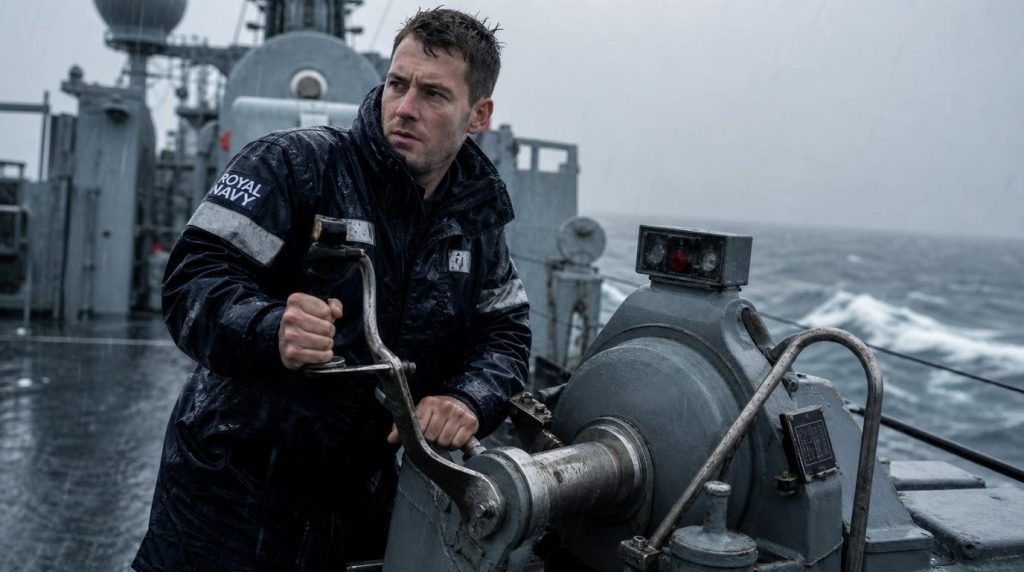
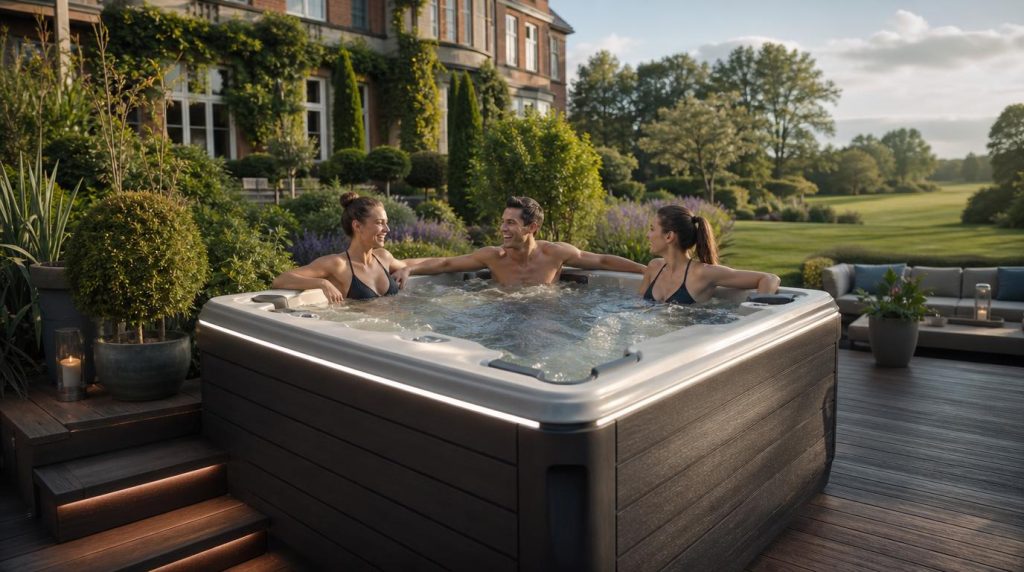
Imagine your customer stepping into their brand-new hot tub after a long day. They press the jet button. Nothing happens. Or worse, imagine a sailor on a naval ship trying to operate a control panel during a heavy storm, and the screen shorts out.
When your product fails, your customer does not blame the water. They blame your brand.
Water is the enemy of electronics. But water is everywhere. It rains. People spill drinks. Factories use high-pressure hoses. You need a Human-Machine Interface (HMI) that simply works, no matter how wet things get.
At RH Technical Industries, we know that a reliable control panel is the heartbeat of your product. You do not just need a simple label or a basic switch. You need an interface built for the real world. Let’s look at how we design custom membrane keypads and HMIs that shrug off the toughest wet environments.
Can Your Membrane Keypad Survive a Hot Tub?
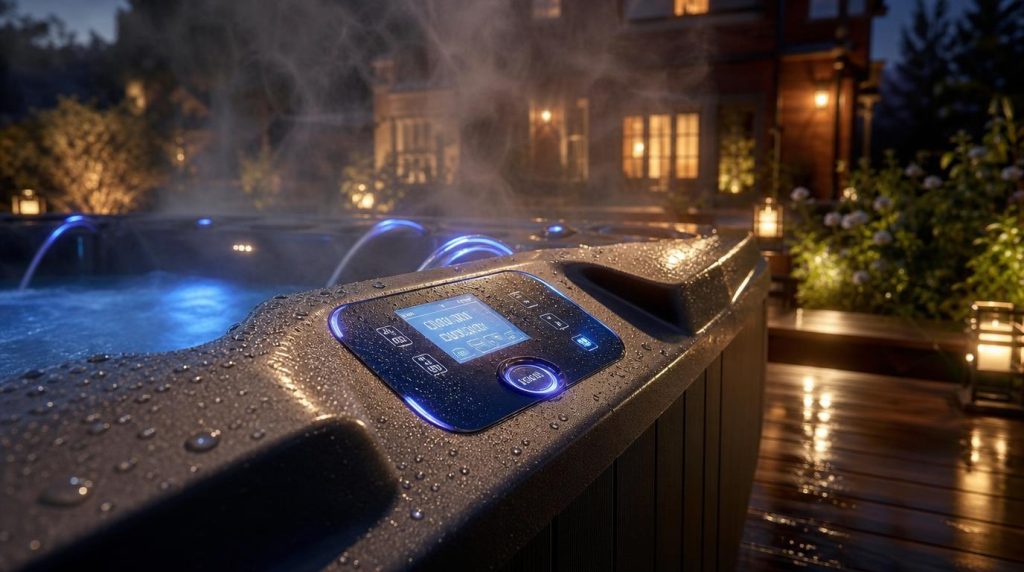
A hot tub is a nightmare for standard electronics. It is not just about a few splashes of water. A hot tub control panel faces a brutal mix of extreme conditions every single day.
Let’s break down exactly what attacks your keypad:
- Water and Steam: Splashes are one thing. Steam is much worse. Hot vapour forces its way into tiny gaps. Once moisture gets inside an unsealed switch, it corrodes the internal circuits. Your keypad stops working, and your customer gets angry.
- Rapid Temperature Swings: A hot tub sits outdoors. It might face freezing snow at night and baking sun during the day. Then, the tub quickly heats up to 40°C. These rapid changes cause materials to expand and contract. Cheap plastics will crack under this stress.
- Harsh Chemicals: Hot tubs rely on chlorine and bromine to stay clean. These are highly aggressive chemicals. If your keypad uses the wrong top layer, these chemicals will eat away at the plastic. The graphics will fade, and the material will become brittle.
- Relentless UV Exposure: The sun beats down on the control panel all day long. UV rays degrade poor-quality inks and plastics. Within just a few months, a beautiful display can turn yellow and crack.
- Wet, Pruney Fingers: Users operate hot tubs with soaking wet hands. They press hard. Sometimes they use their fingernails. The interface must withstand this physical abuse without wearing down.
- Heavy Cleaning Agents: Staff or homeowners use harsh detergents to scrub the tub. Your HMI must resist these regular chemical wipe-downs.
Can your current membrane keypad survive all of that? If you use standard, off-the-shelf parts, the answer is usually no. The adhesive fails. The layers peel apart. Water gets in.
You need careful construction and smart material choices. Every single layer of the keypad must work together to block moisture and resist chemicals. When you choose the right materials, you guarantee long-term reliability. Your product stays out of the repair shop, and your customers stay happy.
Designing an HMI for a Wet Environment
How do we build a keypad that survives the hot tub test? Or a marine control panel that survives heavy saltwater? We follow a strict engineering process. At RH, we do not just print graphics. We engineer solutions.
Here is our step-by-step approach to Designing Water-Resistant Interfaces and HMIs for a wet environment.
1. The Environment First
We start by asking questions. Where does your product live? Will it face high-pressure cleaning jets? Will it sit in saltwater? Does it face extreme cold or heat? We map out every single threat. This deep understanding guides every choice we make.
2. Smart Material Selection
You cannot use standard materials in a wet zone. For the top graphic overlay, we usually choose high-performance polyester instead of polycarbonate. Polyester resists chemicals beautifully. It withstands chlorine, bromine, and harsh cleaners. It also flexes millions of times without snapping. We also use UV-resistant materials so your panel will not yellow in the harsh sun.
3. IP67 – Water Resistance Sealing
Water is sneaky. It always looks for the weakest link. Therefore, we seal the entire membrane keypad. We use full perimeter gaskets to seal the switch tightly to your enclosure. This process completely blocks moisture, dust, and chemical ingress. Your internal controls stay safe and dry, fully protected from the outside world. Thus, an IP67-rated device is fully dust-tight and can survive submersion in up to 1 meter (3.3 feet) of fresh water for up to 30 minutes.
4. Indestructible Graphics
You want your brand to look sharp forever. We print the graphics on the underside of the top overlay. This means the ink sits securely behind a tough, clear shield of plastic. Wet fingers, chemicals, and UV rays never actually touch the printed ink. Your logo and your instructions never rub off.
5. Gap-Free Switching Technology
Moisture ruins standard mechanical switches. Dirt and water easily fall into the gaps between the buttons. A membrane switch is completely different. It has a flat surface with absolutely no gaps. We seal the conductive layers safely inside. We can also add metal domes under the graphic overlay for a sharp, tactile click. The user feels a solid “snap” that confirms their press, even when wearing heavy, wet gloves,
6. Bulletproof Adhesives
A great keypad falls off if you use the wrong glue. Water and heat quickly destroy cheap adhesives. We use marine-grade, high-performance acrylic adhesives. These adhesives bond aggressively to your product housing. They resist water, chemicals, and extreme heat. Your keypad stays exactly where you put it, year after year.
7. Rigorous Testing
We do not just hope the design works. We know it works. RH designs prototypes to face real-world conditions. This stage proves the seal holds tight and the materials perform perfectly before you launch your product to the market and the worst environmental conditions you could have dreamt up.
Your Engineering Partner, Not Just a Printer
Many companies will print a shiny label and sell you a basic switch. They leave the hard engineering up to you. That is a massive risk. If the interface fails, it ruins your product’s reputation.
At RH, we do things differently. We partner with you from the very beginning, look at your bare housing. We look at your circuit boards, which helps us design water-resistant interfaces with the perfect physical groove for a watertight gasket. Then we help you choose the exact adhesive for your specific metal or plastic enclosure.
We solve complex problems before they ever reach the factory floor. Do you need a “secret-until-lit” panel that cuts through the fog and only shows buttons when active? We do that. Do you need embossed buttons so a user can feel the controls with wet hands without looking? We do that, too.
We take the stress out of your design process. You gain a dedicated engineering team that cares about your product just as much as you do.
Protect Your Reputation
From luxury hot tubs to heavy-duty battleships, water always looks for a way in. Do not let it ruin your product. A standard interface will eventually fail when things get wet. Relax, and let us do the work; a custom, expertly engineered HMI from RH will thrive in any environment.
Your customers expect your product to work perfectly every single time they press a button. Give them that certainty. Protect your brand reputation. Build an interface that lasts a lifetime.
Are you designing water-resistant interfaces for a product situated in a harsh, wet environment? Let’s make sure it survives the test. Contact the engineering team at RH Technical Industries today on 01264 721450 or sales@rhti.co.uk. Let us build an interface that works exactly as hard as you do.