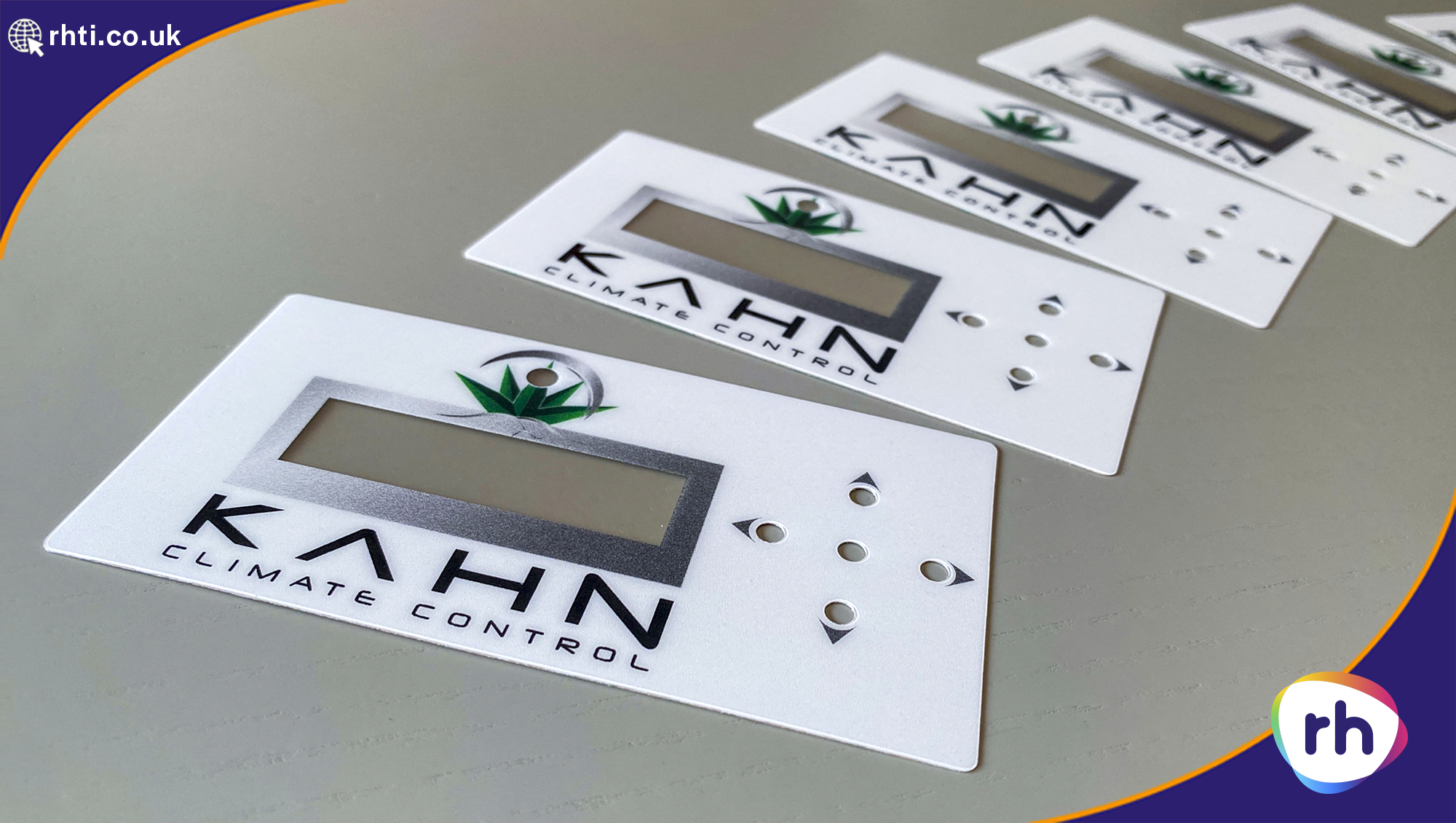
How can digital print help UK manufacturers create better-looking aesthetics?
To stay competitive, forward-thinking UK manufacturers rely on modern flatbed digital print solutions to design and engineer sleek, durable, and razor-sharp hardware interfaces. First impressions happen in seconds. When a customer unboxes a new machine, the control panel is the very first component they interact with. If a graphic overlay shows dull colours, faint typography, or an off-centre LED window, it immediately undermines their confidence in your engineering.
Digital Print Micro-Precision & Variable Droplet Technology
Traditional screen-printing deposits fixed ink drops using stationary mesh screens, making fine details and smooth gradients difficult. Modern digital print engines use variable-dot piezo technology, dynamically firing ink droplets ranging from 6 to 42 picolitres to deliver crisp typography and smooth shading without screen-dot distortion.
- Micro Droplets (6 picolitres): Print ultra-fine warning symbols, complex wiring schematics, and serial text legible down to 2-point font sizes, alongside smooth, halftone-free colour transitions.
- Macro Droplets (up to 42 picolitres): Deposit dense, high-opacity block colours and background fills that prevent unwanted light bleed from underlying LEDs.
Subsurface Protection & High-Opacity White Inks
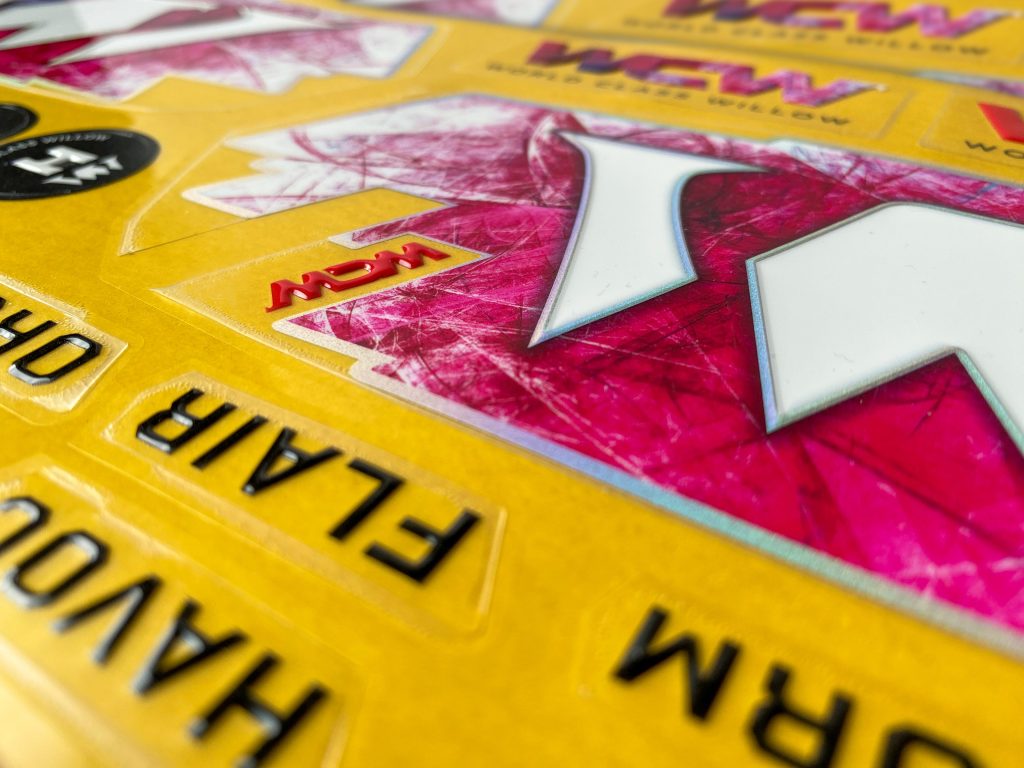
Industrial equipment faces daily exposure to oils, aggressive cleaning solvents, UV rays, and physical wear. To protect interface graphics, printing is applied to the reverse side (subsurface) of clear polycarbonate or polyester film, using the tough plastic sheet as a built-in protective shield. Because colour inks are naturally translucent on clear films, digital flatbeds apply specialised high-opacity UV white inks as a backing layer.
- Spot White Backing: Applies white ink only behind coloured graphic elements, leaving display windows 100% optically clear for LCD screens.
- Dead-Front Displays: Multi-layer printing combinations (CMYK + White + Black) keep icons completely invisible until an underlying LED illuminates them.
- Rugged Durability: The outer plastic layer absorbs physical impacts and abrasive chemicals without fading, smudging, or scratching the ink underneath.
Instant UV Curing for Rapid Delivery
Older solvent ink systems require 12 to 24 hours of rack drying before sheets can be moved to final finishing. Modern flatbed equipment uses carriage-mounted LED UV lamps that instantly polymerise liquid ink droplets into a solid, durable film upon contact.
- Zero Drying Wait Time: Printed sheets move straight into secondary operations like adhesive lamination, tactile embossing, and digital cutting.
- No Heat Distortion: Cold-curing LED UV lamps protect thin, heat-sensitive synthetic substrates from warping or expanding.
- Chemical Cross-Linking: UV inks bond directly with industrial plastic substrates, delivering superior resistance against harsh shop-floor environments.
Large-Format Precision & Scalable Production
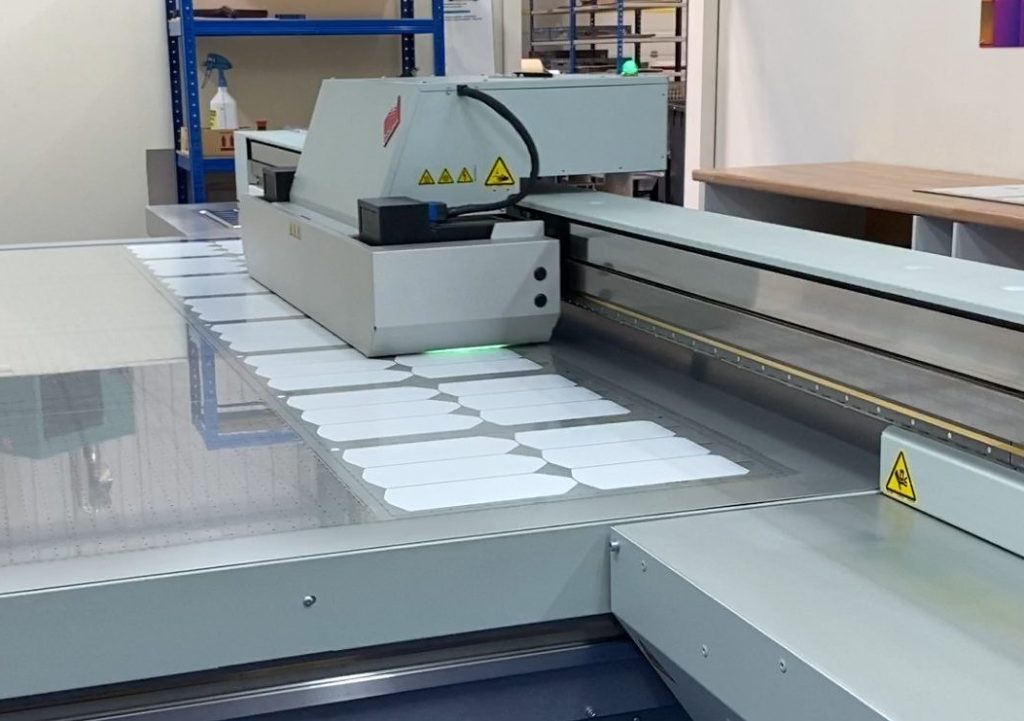
Traditional screen setups require expensive physical tooling and weeks of waiting for sample revisions. Digital printing eliminates physical screens entirely, allowing direct transitions from CAD files to finished physical samples. Our 2500 mm x 1250 mm flatbed digital vacuum table locks plastic sheets flat, eliminating material drift and allowing large industrial fascias or hundreds of nested smaller labels to print with sub-millimetre accuracy.
- Single-Row Head Array: Optimised for fine-detail prototypes and micro-precision alignment.
- Double-Row Head Array: Doubles pass efficiency for rapid high-volume runs at speeds exceeding 50 m²/hr.
- Flexible Batch Sizes: Run 10 prototype units for user testing or 5,000 production units without paying short-run penalties or re-tooling costs for design tweaks.
Digital Print Process Comparison
| Feature / Spec | Traditional Screen Printing | Advanced Flatbed Digital Print |
| Tooling & Setup Costs . | High upfront cost per screen/colour . | Zero physical screen setup . . |
| Sample Turnaround . | Weeks (requires new physical tooling) . | Days (instant CAD file updates) . |
| Print Bed Format . | Stationary Frame / Screen . | 2500 mm x 1250 mm Vacuum Table . |
| Droplet Resolution . . | Fixed mesh dot size . . | Dynamic 6–42 pL (up to 1440 dpi equivalent) . |
| Curing / Drying Time . | 12–24 hours Thermal rack drying . | 0 seconds (Instant UV polymerisation) . |
| White Ink Application . | Requires separate physical screens . | Automated spot, flood, & multi-layer white . |
| Variable Data Support | Difficult/manual . | Automated sequential serials, barcodes, & QR codes |
Modernise Your Product Line with RH Technical Industries
Your interface is the primary physical touchpoint between your customer and your technology. Partnering with a dedicated UK manufacturing specialist ensures your custom graphic overlays, membrane keypads, and industrial labels meet the highest engineering standards.
At RH Technical Industries, we pair decades of industrial interface expertise with state-of-the-art flatbed digital printing technology.
- Full in-house CAD reviews, material specification, and adhesive selection.
- Large-format flatbed printing up to 2500 mm x 1250 mm for panels of any size.
- Single-row and double-row head options for seamless scaling from prototypes to volume runs.
- Complete in-house finishing, including laser cutting, custom die-cutting, tactile dome embossing, and selective surface texturing.
Ready to elevate your hardware’s precision and visual appeal? Contact our technical engineering team today to discuss your project requirements or request a material sample pack.