Six Top Industrial Label and Graphic Overlay Materials?
Choosing the right Graphic Overlay Materials for a control panel or an industrial label is more than just a technical step. It is about how a user interacts with a machine, how a medical device stays clean in a hospital, and how an outdoor interface survives a freezing winter. The material you choose determines whether a product feels high-quality or fails after a few months of use.
In the world of membrane switches and graphic overlays, polyester and polycarbonate films are the industry standards. However, not all films are created equal. Some are built to resist fire, while others are designed to kill bacteria on contact. Here is a look at six of the most popular and effective solutions for membrane keypads and industrial labels.
Lexan™ FR63 and FR65: The Safety Standards
When safety is the top priority, especially regarding fire prevention, Lexan™ flame-retardant (FR) films are the primary choice. These are thin-film polycarbonates that carry a UL94 V-0 rating. This means they are designed to stop burning within a few seconds if they catch fire, preventing the spread of flames in electronic devices.
Key Features and Benefits:
- Flame Resistance: These films meet strict safety standards like UL94 V-0 and VTM-0.
- Insulation: They offer excellent electrical and thermal insulation, making them ideal for backing labels or internal spacers in high-voltage equipment.
- Durability: Lexan films are known for their mechanical strength and resistance to puncturing.
Real-World Example: Imagine the control panel on a piece of industrial power distribution equipment. If a short circuit occurs inside the box, you do not want the exterior label or keypad to fuel a fire. Designers use Lexan FR63 (which has a matte/polished finish) or FR65 (velvet/matte) to ensure the interface meets building safety codes while remaining clear and easy to read.

MacDermid Autotex F150: The Industry Workhorse
If you have ever pressed a button on a microwave or a basic industrial controller, there is a high chance you were touching Autotex F150. This is a hard-coated polyester film with a “Fine” texture. It is widely considered the standard for Graphic Overlay Materials because it balances cost, durability, and ease of use.
Key Features and Benefits:
- Abrasion Resistance: The hard coat protects the graphics printed underneath from being scratched off by repetitive finger presses.
- Chemical Resistance: It stands up to common household and industrial cleaners without clouding or cracking.
- Flexibility: It can be embossed, meaning the buttons can be “popped up” so the user can feel where to press.
Real-World Example: A common application is the keypad on a digital kitchen appliance. Because it is pressed hundreds of times a week and often wiped down with soapy water, the Autotex F150 ensures the “Start” and “Stop” labels stay crisp and the buttons don’t wear through.

MacDermid Autotex XEV150: Built for the Outdoors
Standard labels and keypads often yellow, crack, or peel when exposed to direct sunlight for long periods. Autotex XE (Extreme Environment) films, specifically the XEV150 (the “V” stands for Velvet texture), were developed to solve this problem.
Key Features and Benefits:
- UV Resistance: This material is specifically formulated to resist the damaging effects of ultraviolet light from the sun.
- Weatherability: It can handle widely fluctuating temperatures and high humidity without losing its shape or bond.
- Heavy-Duty Protection: Like the rest of the Autotex line, it has a rugged hard coat that resists scratching.
Real-World Example: Think about a control panel on a gas pump or an outdoor car wash kiosk. These interfaces are beaten by the sun all day and might face rain or snow. Using XEV150 ensures that the “Insert Card” instructions remain visible and the keypad remains functional for years, even in harsh weather.

MacDermid Autotex AMF203L: The Hygienic Choice
In environments like hospitals, dental offices, or food processing plants, surfaces are touched by many people. This creates a risk of bacterial growth. Autotex AM (Antimicrobial) uses Microban® technology, which is embedded directly into the film’s hard coat during the manufacturing process.
Key Features and Benefits:
- 24/7 Protection: The antimicrobial technology is active at all times, inhibiting the growth of bacteria such as E. coli and MRSA on the surface.
- Robust Cleaning: While it inhibits bacterial growth, the film is still tough enough to withstand harsh disinfectants used in medical settings, such as bleach and hydrogen peroxide.
- Hidden Graphics: Like other Autotex products, the ink is printed on the second surface (the back), so the graphics cannot be rubbed off by cleaning.
Real-World Example: In a hospital operating room, the touch panels for lighting or heart monitors must be perfectly clean. Autotex AMF203L (a 200-micron film with a Fine texture) provides a surface that stays cleaner between routine washings, helping to maintain a sterile environment.

MacDermid Autotex S150: The Look of Steel
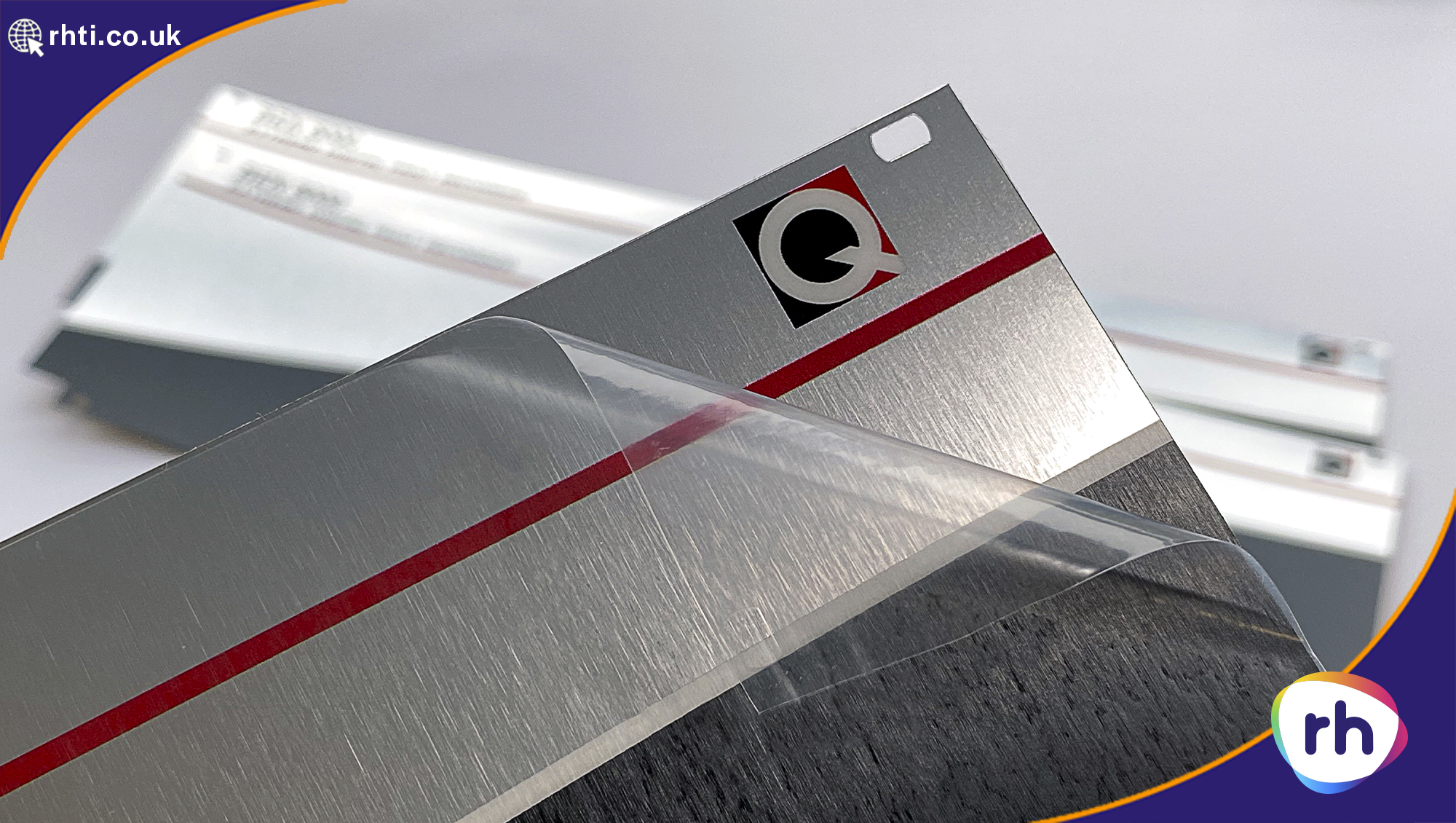
Sometimes, a product needs the durability of polyester but the high-end look of metal. Autotex Steel (S150) is a textured hard coat film that, when printed with metallic inks, looks exactly like brushed stainless steel. It is one of the most aesthetically versatile Graphic Overlay Materials available.
Key Features and Benefits:
- Metallic Appearance: It provides a premium “steel” look without the weight, cost, or conductivity of real metal.
- Woodgrain Options: Beyond metal, it can also be used to create very effective woodgrain finishes for decorative panels.
- High Performance: It maintains the same high abrasion resistance and flexibility required for membrane switches.
Real-World Example: Manufacturers of luxury appliances or high-end office equipment often use Autotex S150 for control panels. It allows the machine to match the stainless-steel finish of other equipment while still allowing for a functional, embossed membrane keypad that is easy to clean.

MacDermid Autotex ST150 L: The Premium “Softouch”
While standard keypads have a slightly grainy or “plasticky” feel, Autotex Softouch (ST150 L) offers something different. It has a unique coating chemistry that produces a flat, matte finish and a soft, premium feel to the touch.
Key Features and Benefits:
- Sensory Experience: It feels smoother and “softer” than standard textured films, which can make a product feel more expensive or user-friendly.
- Reduced Glare: The flat matte finish is excellent at reducing reflections, making it easier to read labels under bright office lights.
- Functional Strength: Despite its soft feel, it is still a hard-coated polyester that resists chemicals and abrasion.
Real-World Example: This material is popular for high-end consumer electronics or premium automotive interior controls. When a user interacts with a “Softouch” panel on a car’s dashboard or a high-end audio controller, the tactile feedback reinforces the idea that they are using a top-tier product.
Conclusion: Making the Right Graphic Overlay Materials Choice
Selecting the right material for your industrial label or membrane switch is a balance between environmental impact and user experience.
- If you need safety and fire protection, go with Lexan FR63/65.
- For standard, reliable indoor use, Autotex F150 is the go-to.
- For outdoor panels that face the sun, use Autotex XEV150.
- In medical or food-service areas, the Autotex AMF203L adds a layer of hygiene.
- If you want a brushed metal look, choose Autotex S150.
- And for a premium, smooth feel, Autotex ST150 L is the best option.
By understanding the unique properties of these materials, you can ensure that your product not only looks great but also survives the demands of its specific environment. Whether it is resisting a fire or simply surviving the daily use of a busy kitchen, the right film makes all the difference.
Engineering Success with RH Technical Industries
Selecting the right material is only the first step. To truly get the most out of these high-performance films, you need a design that works with the material’s strengths. This is where the engineering department at RH Technical Industries makes a difference.
With decades of experience in membrane switch design and industrial labelling, our team helps you navigate the technical details. We look at your project’s environment—whether it’s the high-heat interior of a machine or the germ-conscious halls of a clinic—and help you pick the exact film, adhesive, and ink combination to ensure success. We don’t just print labels, we engineer interfaces that last.
Our strong relationships with world-class suppliers such as Cadillac Plastic, MacDermid Alpha, and SABIC ensure we always have access to the latest materials. Whether you are starting a new project or looking to improve an existing design, reach out to our engineering team. We are ready to help you find the perfect material for your specific needs.