Inhouse CNC Metalwork: The Secret to Unbreakable Keypads
Inhouse CNC Metalwork gives your user interface the solid strength and exact fit your product needs to survive tough environments. When you design a machine or electronic device, you pour months of effort into the internal mechanics and circuit boards. Yet your end-user only touches one part of that system every day: the keypad or control panel. If that front interface flexes, peels, or fails under heavy use, your customer blames the entire machine.
Many engineers treat the metal backing plate as an afterthought. They source a graphic overlay from one vendor and outsource the aluminium panel to a separate sheet-metal shop. That split supply chain introduces tolerance stack-ups, delays, and finger-pointing when holes do not line up. Bringing precision machining under the same roof as print and assembly solves these headaches before they reach your production line.
How Inhouse CNC Metalwork Delivers Repeatable Quality
A membrane switch or silicone keypad is only as reliable as the surface beneath it. If a backing plate has tiny variations in hole placement or rough edges, the entire assembly suffers. Computer Numerical Control (CNC) machining removes human guesswork from metal fabrication.
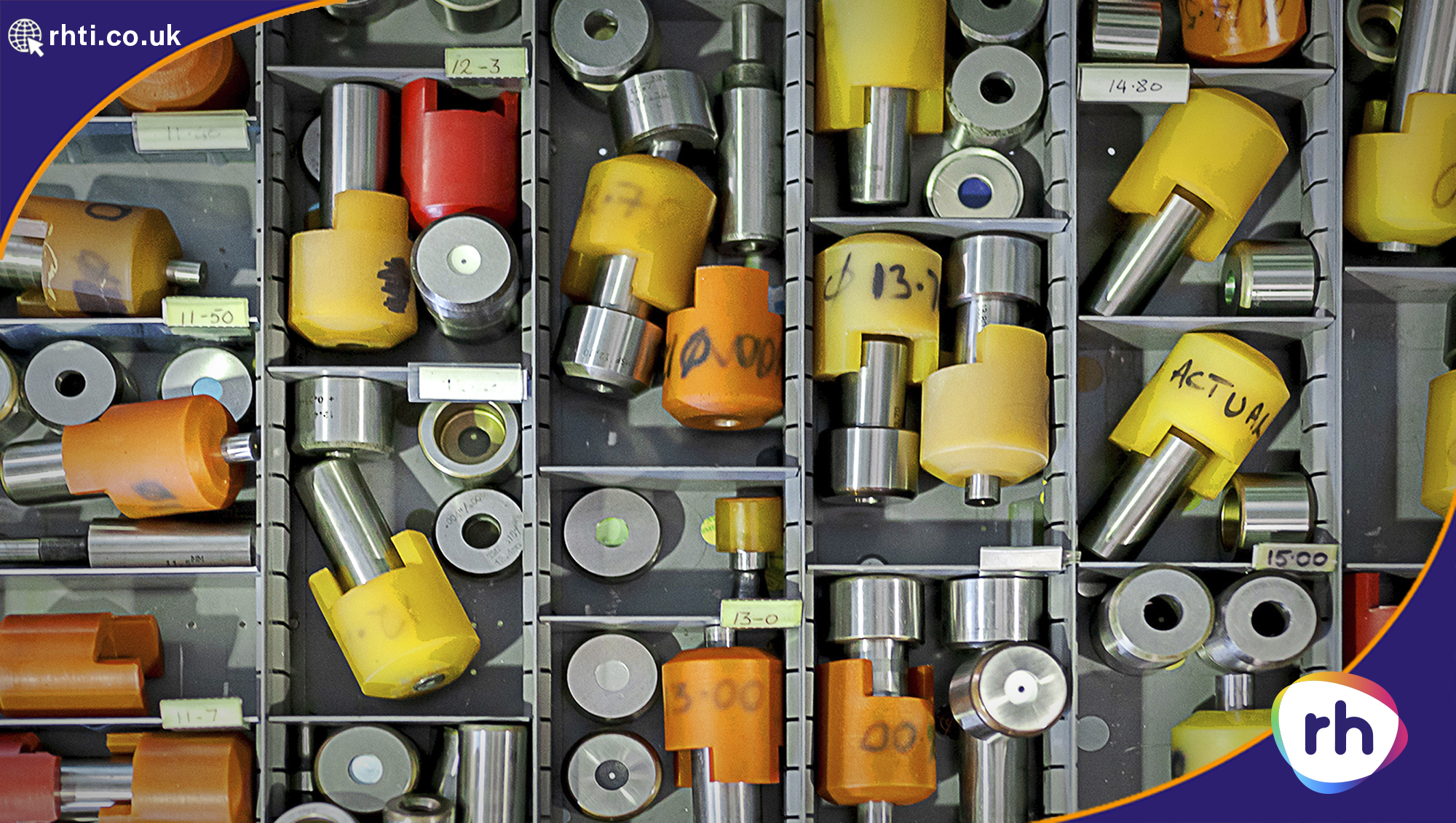
At RH Technical Industries, we run advanced CNC turret presses directly within our UK facility. Once our engineers program your CAD geometry into our system, the machine executes every punch, cutout, and contour with digital accuracy.
Here is what that repeatability means for your project:
- Identical parts from batch to batch: The first panel off the line matches the thousandth panel down to a fraction of a millimetre. You never have to worry about batch drift ruining your assembly line schedule.
- Burr-free edges for total adhesion: Poorly punched metal leaves sharp burrs and micro-ridges. Those tiny flaws prevent high-performance 3M adhesives from bonding flat, which lets moisture and dust creep inside your switch. Clean CNC tooling leaves crisp, flat edges that ensure an airtight seal.
- Exact alignment with display windows: Modern interfaces often pair tactile buttons with LCD screens or LED indicators. CNC precision guarantees that cutouts in the metal plate align seamlessly with the clear windows on your graphic overlay.
- Smart nesting that lowers your costs: Advanced CNC software arranges your parts on a single sheet of metal like a master puzzle solver. This nesting process slashes material waste, allowing us to pass direct cost savings on to you, even on low-volume runs or prototypes.
Building an Unbreakable Foundation with Metal
A flexible membrane switch feels cheap if you mount it onto thin plastic or a weak housing. When an operator presses a button with a gloved hand or heavy force, the panel flexes. That flex absorbs the tactile snap of the metal dome, leaving the user unsure if the machine registered their input. Over time, constant flexing fatigues the internal silver-ink tracks and could cause premature circuit failure.
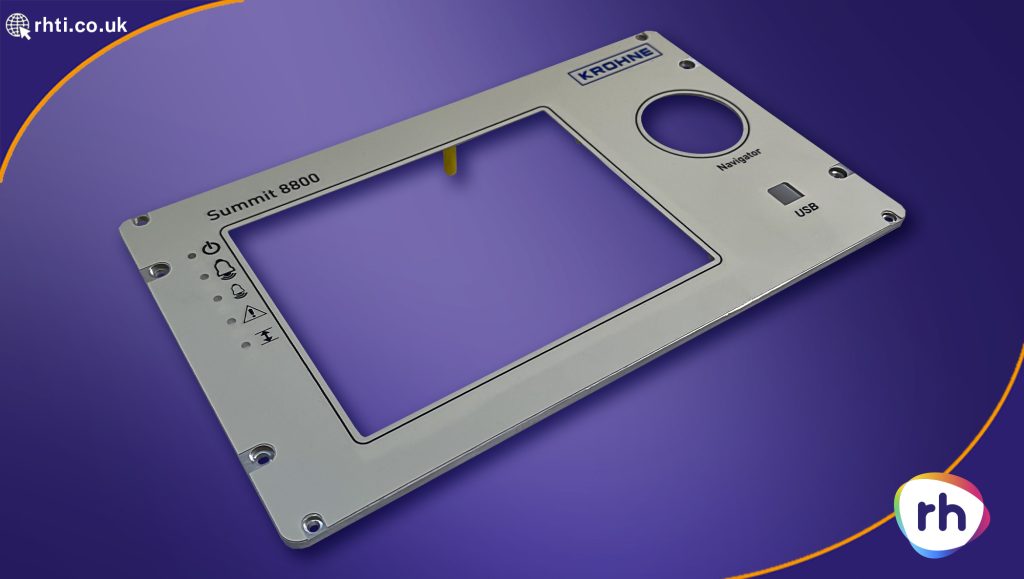
Pairing your keypad with a rigid metal foundation changes the entire user experience. Using our 40-tonne CNC turret press, we process robust aluminium panels up to 3mm thick alongside stainless steel and rigid engineering plastics.
A solid metal backing plate gives your interface exceptional physical strength:
- Zero-flex tactile feedback: A rigid 2mm or 3mm aluminium chassis acts like an anvil behind the switch. Every press delivers a crisp, unmistakable click that operators feel immediately, even in noisy factories or while wearing thick PPE.
- Impact and vibration resistance: Heavy machinery, agricultural vehicles, and industrial tools endure constant shock. A metal sub-panel absorbs mechanical stress and protects delicate internal electronics from physical damage.
- Environmental sealing (IP65 and beyond): When we bond a sealed graphic overlay onto a rigid, flat metal plate, we create an impenetrable barrier. Water, oils, harsh cleaning chemicals, and airborne grit cannot reach your internal PCB.
- Built-in EMC and RFI shielding: Electronic noise can disrupt sensitive medical or industrial sensors. An aluminium backing plate naturally helps shield your internal circuitry from electromagnetic and radio-frequency interference.
Complete Secondary Operations Under One Roof
Cutting a flat piece of metal is rarely the final step in building a working control panel. Most assemblies require extra hardware to mount cleanly into your product housing. If you have to ship blank plates to another workshop for hardware insertion or surface finishing, you lose valuable days in transit.
Because we keep our metalwork and secondary operations in-house, we transform raw metal sheets into ready-to-install sub-assemblies.
- PEM studs and threaded inserts: We press self-clinching studs, nuts, and standoffs directly into the rear of your metal panel. Your assembly team can bolt the finished keypad straight onto your enclosure without visible front screws.
- Brushed and anodised finishes: Need a cosmetic metal fascia that resists scratches and corrosion? We offer linished (brushed) aluminium finishes and protective treatments that look sharp and withstand daily wear.
- Pin registration across every department: As your job moves from CNC metalwork to screen printing, embossing, and final lamination, we use mechanical pin registration. This removes hand-and-eye alignment errors, ensuring your graphics, embossed domes, and metal cutouts lock together perfectly.
- 100% electrical and visual testing: Before a single keypad leaves our facility, our team tests every circuit path, LED, and tactile dome. You receive a finished, plug-and-play module that works straight out of the box.
Single-Source Engineering vs. Fragmented Supply Chains
When you work with an engineering solutions partner rather than a simple print shop, you eliminate the hidden costs of multi-vendor management. Consider what happens when a third-party metal supplier makes a 0.5mm error on a display cutout. The printer blames the metal shop, the metal shop blames the drawing, and your product launch stalls.
By keeping design, tooling, print, and CNC metalwork in one facility, our engineers review your entire stack-up from day one. We spot potential tolerance clashes during the Design for Manufacture (DFM) stage, before we cut a single sheet of aluminium. Whether you need a ruggedised keypad for an outdoor EV charger, a sterile antimicrobial panel for a medical device, or a heavy-duty interface for factory automation, unified production keeps your timeline intact.
Ready to Strengthen Your Next Interface Project?
Your product deserves a front panel that matches the quality of the engineering inside it. Combining precision overlays with rigid, custom-machined metal backing gives your customers confidence every time they press a button.
If you are developing a new control panel or looking to upgrade an existing interface, talk to our technical team at RH Technical Industries. Send us your CAD files or initial sketches, and we will help you engineer a durable, repeatable solution built to last. Call our team on 01264 721450 to discuss your next project.